What Boards, Sovereigns, and Investors Must Understand Now
Cybersecurity has crossed a threshold.
It is no longer a technical issue to be delegated to IT teams or compliance functions. It is now a leadership, governance, and sovereignty challenge
— one that directly shapes resilience, valuation, and national security.
This article brings together three core insights discussed during the Future Investment Initiative (FII) in Riyadh, synthesising themes from recent Tech Command Investing discussions.
1. Not All Cyberattacks Are About Money
Cyberattacks are often treated as financially motivated crimes. While many are, an increasing number are strategically driven.
These attacks are designed to:
- Destabilise states
- Erode trust in institutions
- Shape political and societal decision-making
In these cases, cyber risk becomes national security risk — not an IT problem.
🎧 Related short video:
➡️ The War Before the War: How Social Media Now Prepares the Battlefield
2. If This Is the Threat, Leadership Becomes Decisive

When cyber operations are strategic rather than criminal, the responsibility cannot sit solely with technical teams.
Leadership — not IT — becomes the decisive factor.
Boards and C-suites must understand:
- What threats they are truly exposed to
- What assets matter most
- What failure would look like in the worst case
Without this clarity, execution becomes reactive rather than strategic.
3. How Does a C-Suite Start Thinking Like a CISO?
Thinking like a Chief Information Security Officer does not mean becoming technical experts.
It means adopting a risk-led mindset:
- Understand real threat exposure
- Protect crown-jewel assets first
- Train people relentlessly
Compliance alone creates a false sense of security. Fundamentals matter more than tools.
🎧 Related short video:
➡️ How Does a C-Suite Start Thinking Like a Chief Information Security Officer?
4. Humans Are Now the Primary Attack Surface
Modern cyber operations increasingly bypass systems by exploiting behaviour.
AI-driven phishing, impersonation, and deepfakes target people not infrastructure.
This makes training, rehearsal, and leadership culture central to cyber resilience.
5. Cybersecurity Is a Leadership Duty
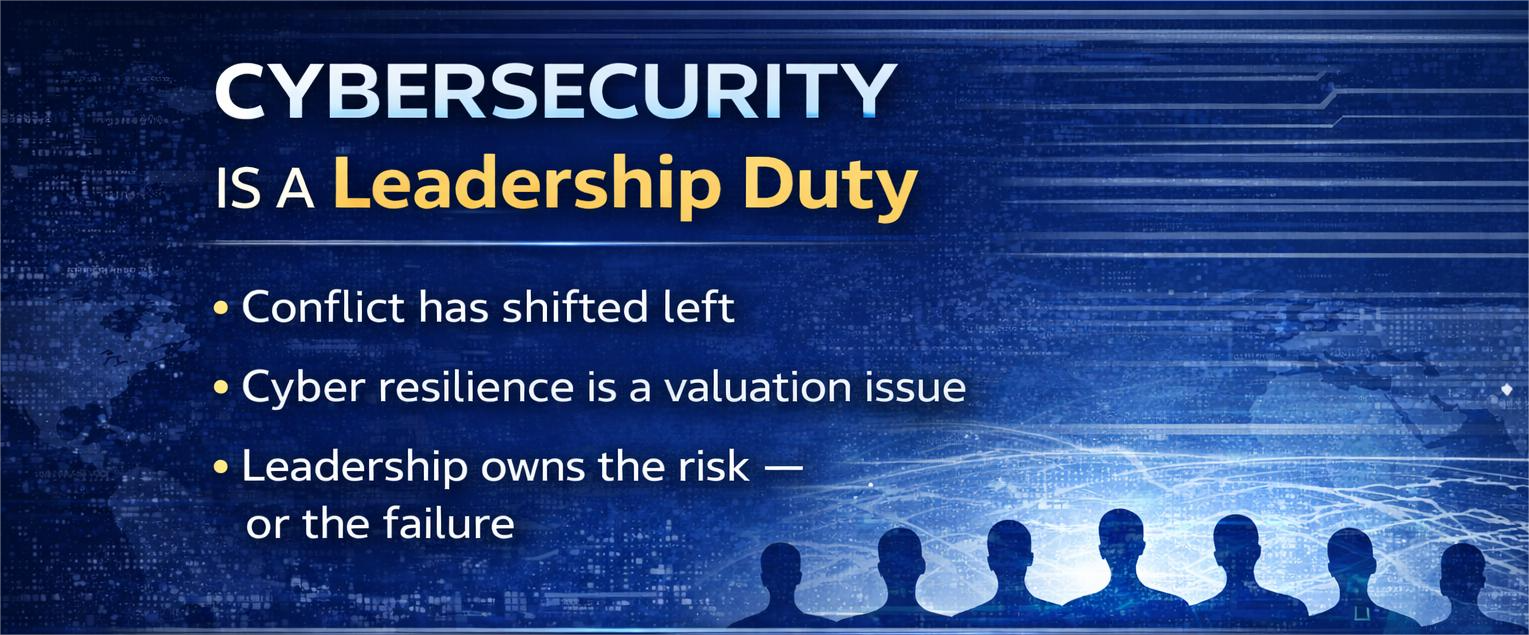
Conflict has shifted left into the digital and cognitive domains.
Cyber resilience now directly affects:
- Enterprise valuation
- Strategic credibility
- National and economic security
Leadership either owns this risk or owns the failure.
Conclusion: Sovereignty Depends on Digital & Cognitive Resilience
Cybersecurity today is not about technology alone.
It is about leadership decisions, governance frameworks, and the ability to operate under persistent digital pressure.
🎥 Watch the full FII panel discussion, and explore the related short clips from the Tech Command Investing podcast.