From my panel discussion in Riyadh at the Future Investment Initiative (FII), I highlighted one core distinction that matters deeply for sovereigns, boards, and investors alike:
There are two fundamentally different types of cyberattacks.
▶️ Watch the short extract
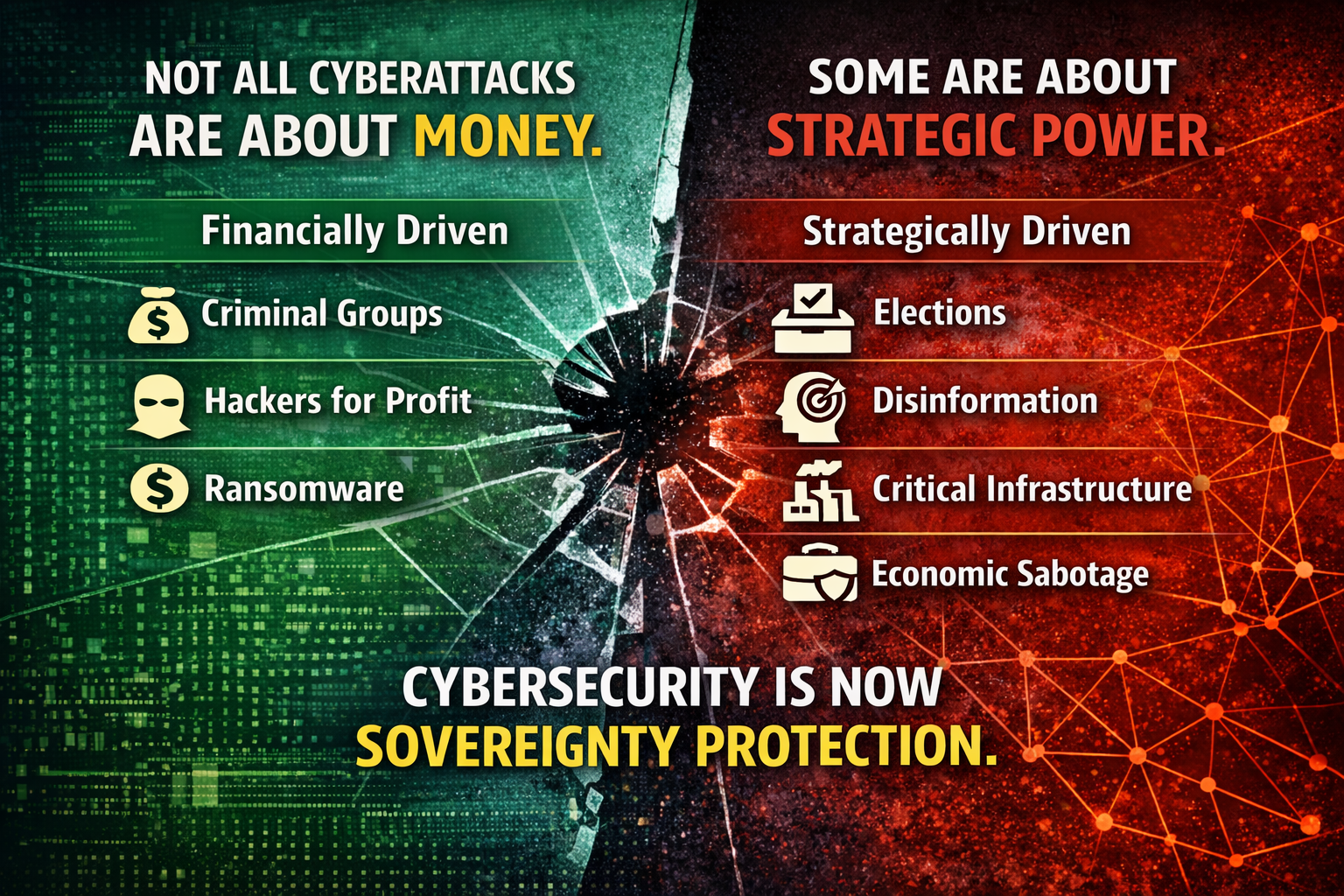
Financially driven attacks
Carried out by individuals, criminal groups, or sometimes state-linked teams.
The objective is clear: money.
Strategically driven attacks
Conducted by state actors or those acting on their behalf often with maximum deniability.
The objective is not profit, but destabilisation of states.
These strategically driven attacks increasingly target:
- Democratic elections
- Disinformation and cognitive warfare
- Critical national infrastructure (CNI)
- Economic actors and companies essential to sovereign security
This second category is where cyber risk becomes national security risk.
🎧 In this short video extract from the Tech Command Investing podcast,
I expand on this distinction as part of a panel discussion alongside Yasser Alswailem, Philippe Keryer, and Ameya Talwalkar, moderated by Xenia Wickett.
It is also where traditional cybersecurity frameworks designed around IT protection and loss prevention fall short.
Strategic cyber operations are about shaping societies, eroding trust, and weakening sovereign decision-making over time.
This is precisely why KARISTA’s K Tech II successor fund, currently being raised, focuses on strategically driven cyber threats — backing European dual-use startups that provide the tools to counter these attacks across NATO-allied economies.
Cybersecurity today is no longer an IT function.
It is sovereignty protection.
Thanks to my fellow panelists and the FII Institute team for hosting a timely and important discussion in Riyadh.
▶️ Watch the short extract
This short video highlights key insights from the FII panel discussion, focusing on the distinction between financially driven cyberattacks and strategically driven cyber operations that pose risks to national security and sovereign stability.
🎧 Want the complete conversation?
Watch the complete FII panel discussion on YouTube for the full exchange and deeper context.